
Discover how small, consistent changes to exercise and nutrition can help you build healthier habits that fit your lifestyle.
Have you ever decided that today is the day you’re going to change everything?
You promise yourself you’ll exercise five days a week, completely overhaul your diet, drink more water, get eight hours of sleep, and finally get serious about your health.
You’re motivated. You’re ready. This time, things will be different!
Then Monday arrives.
Your schedule gets busy. Work runs late. You don’t have time to prepare the meals you planned. Your workout gets pushed to tomorrow, and before you know it, you’re back to your old routine.
Sound familiar?
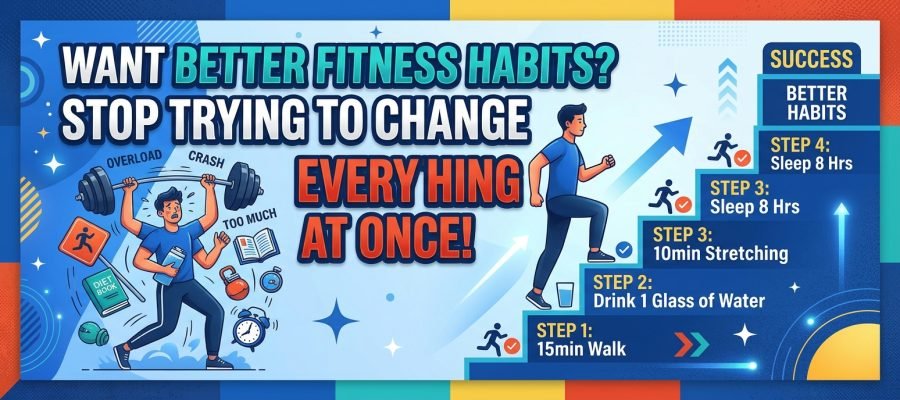
You’re not alone. One of the biggest mistakes people make when trying to improve their fitness and nutrition is attempting to change too many things at once.
The secret to building better fitness habits isn’t doing more. It’s starting with something you can consistently do.
As a fitness and nutrition professional with more than 30 years of experience, I’ve learned that successful lifestyle changes aren’t about following the most complicated program or having unlimited time and motivation. They’re about finding practical strategies that work with your schedule, preferences, current fitness level, and goals.
Let’s look at how you can start building healthier habits without turning your life upside down.
Why Trying to Change Everything at Once Often Backfires
When motivation is high, it’s easy to create an ambitious plan.
You might decide to wake up an hour earlier, go to the gym every day, eliminate your favorite foods, and prepare every meal in advance.
While these goals may sound great on paper, they can become difficult to maintain when real life gets in the way.
Here are three common reasons why making too many changes at once can be challenging.
- You’re Adding Too Much to Your Schedule
Your day is already filled with responsibilities. You have work, family, appointments, errands, and other commitments.
Adding several new habits at once can make your schedule feel overwhelming.
Instead of trying to find an hour for exercise, start with a 10-minute walk. Rather than preparing an entire week’s worth of meals, begin by planning tomorrow’s lunch.
Small changes are often easier to fit into an existing routine.
- You’re Depending on Motivation to Do All the Work
Motivation is useful, especially when you’re getting started. However, it naturally fluctuates.
Some days you’ll feel energized and ready to tackle your goals. Other days, you may be tired, stressed, or short on time.
If your fitness plan depends on feeling motivated every day, it may be difficult to maintain.
A better approach is to create simple habits that require less planning and fewer decisions.
For example, schedule a short walk after lunch or keep your workout clothes somewhere convenient. These small adjustments can make it easier to follow through when motivation is low.
- You’re Expecting Immediate Results
Healthy lifestyle changes take time.
You may not notice a dramatic difference in your energy, strength, or fitness after a few days. That doesn’t mean your efforts aren’t worthwhile.
When you focus only on immediate results, it’s easy to become discouraged before you’ve had time to establish a routine.
Instead, pay attention to the actions you can control.
Did you take your walk? Did you eat a balanced breakfast? Did you complete your planned strength-training session?
Those actions are meaningful steps toward your larger goals.
Remember: You’re building a lifestyle, not trying to win a one-week competition.
The One-Habit Approach to Better Fitness and Nutrition
Here’s a simple strategy I recommend: Choose one manageable habit to focus on this week.
Not five. Not ten. Just one.
Pick something that supports your goals and fits your current lifestyle.
Once that behavior becomes more consistent, you can decide whether you’re ready to add another.
This approach helps you focus on what you can realistically accomplish rather than becoming overwhelmed by everything you think you should be doing.
Here are five habits you can start practicing this week.
- Walk for 10 Minutes After Lunch
You don’t need to schedule a long workout to become more active.
A 10-minute walk after lunch is a simple way to incorporate movement into your day.
You could walk around your neighborhood, take a lap around your office building, or head outside during your lunch break.
If your schedule is particularly busy, consider splitting your movement into shorter periods throughout the day.
Try this: Put a 10-minute walk on your calendar immediately after lunch. Treat it as an appointment with yourself.
If 10 minutes feels like too much initially, start with five. You can gradually increase the time as it becomes more comfortable.
The goal is to establish a repeatable routine.
- Include Protein With Breakfast
Nutrition doesn’t have to begin with a complicated meal plan or a long list of foods you can no longer eat.
Start by improving one meal.
Including a source of protein at breakfast can help you build a more balanced meal and support your body’s needs for maintaining and repairing tissues.
Here are a few practical options:
- Eggs with whole-grain toast.
- Plain Greek yogurt with fruit.
- Cottage cheese with berries.
- Oatmeal served with milk or soy milk and nuts.
- A smoothie made with milk or a suitable alternative and a protein source.
You don’t need to eat the same breakfast every day. Choose foods you enjoy and options that fit your schedule, preferences, and nutritional needs.
Try this: Before the week begins, choose two or three protein-rich breakfast options that are easy to prepare.
Having a plan can make it easier to make a balanced choice when your morning gets busy.
- Keep Water Nearby Throughout the Day
It’s easy to become distracted by work and realize you’ve barely had anything to drink.
Rather than relying on memory alone, make hydration more convenient.
Keep a water bottle on your desk, bring water when you travel between meetings, or refill your bottle during regular breaks.
Your fluid needs depend on several factors, including activity level, climate, health, and individual circumstances.
You don’t need to force yourself to drink a specific amount that may not suit your needs. Focus on drinking regularly and paying attention to your body’s needs.
Try this: Fill a reusable water bottle each morning and keep it somewhere visible.
You can also connect drinking water with an existing routine, such as having a glass with meals.
Small environmental changes can make a healthy behavior easier to remember.
- Schedule Two Short Strength-Training Sessions
Strength training is an important part of a well-rounded fitness program.
It can help improve muscular strength and support your ability to perform everyday activities.
But you don’t need to begin with a complicated workout split or spend hours in the gym.
Start by scheduling two manageable strength-training sessions during the week, adjusting the exercises and workload to your current fitness level.
Depending on your abilities and available equipment, your routine might include:
- Chair squats or other appropriate squat variations.
- Wall push-ups or modified push-ups.
- Resistance-band rows.
- Glute bridges.
- Simple core-stability exercises.
Choose exercises you can perform with good technique and without unnecessary discomfort. If you’re new to exercise, have an injury, or have health concerns that affect physical activity, consider getting guidance from a qualified professional.
Try this: Choose two days this week and schedule a short strength-training session. Start with a duration and workload you can manage, then build gradually.
Remember, consistency matters more than creating the perfect workout on day one.
- Prepare a Healthy Snack Before Your Workday Gets Busy
When you’re hungry and short on time, convenience often determines what you eat.
Planning ahead can help you avoid having to make every food decision at the last minute.
Consider keeping practical snack options available, such as:
- An apple with peanut butter.
- Greek yogurt.
- Nuts and a piece of fruit.
- Hummus with vegetables.
- Whole-grain crackers with cheese.
The right choice depends on your preferences, dietary needs, and overall eating pattern.
You don’t need to eliminate every less nutritious snack you enjoy. The objective is to make balanced options convenient and accessible.
Try this: Choose one or two snacks at the beginning of the week and prepare them ahead of time.
If you work in an office, keep suitable nonperishable options available. If you work from home, place prepared snacks somewhere convenient in your refrigerator.
A little preparation can make a busy day easier to navigate.
How to Turn a Small Change Into a Lasting Habit
Choosing a habit is the first step. The next step is finding a way to repeat it consistently.
You don’t have to rely on willpower alone. A few simple strategies can help.
Connect Your New Habit to Something You Already Do
Look for an existing routine that can serve as a reminder.
For example:
- After lunch, I’ll take a 10-minute walk.
- When I prepare breakfast, I’ll include a protein source.
- Before my first meeting, I’ll fill my water bottle.
- On Tuesday and Friday, I’ll complete my strength-training routine.
- Before finishing work, I’ll prepare a snack for tomorrow.
Connecting a new behavior to an established routine can make it easier to remember.
Make the Healthy Choice Convenient
Your environment can influence your decisions.
If your walking shoes are easy to find, you’re more likely to have them ready for a walk. If your water bottle is on your desk, you’ll have a visible reminder to drink. If you’ve prepared breakfast ingredients in advance, your morning meal may require less effort.
Look for ways to remove unnecessary obstacles.
You don’t have to rely on discipline for every decision when you can make the desired behavior easier to perform.
Start Small Enough to Succeed
Your starting point should reflect your current circumstances.
If you haven’t exercised regularly, a short walk may be a better starting point than a demanding workout.
If your meals are inconsistent, begin by planning one balanced meal rather than attempting a complete nutritional overhaul.
You can always increase the challenge later.
Starting small doesn’t mean your goals are unimportant. It means you’re giving yourself a practical foundation on which to build.
Track Your Actions, Not Just Your Results
It’s natural to want to see changes in your weight, strength, endurance, or energy.
However, those outcomes can fluctuate, and some take time to develop.
In the early stages, track the behaviors that move you toward your goals.
You might mark a calendar every time you complete your planned walk or record the strength-training sessions you finish.
A simple checklist can help you see your progress and identify patterns.
It can also remind you that you’re making an effort, even when the results aren’t immediately obvious.
Have a Plan for Busy Days
Life doesn’t always follow your schedule.
You may have an unexpected meeting, a family responsibility, or a day when you simply feel tired.
Instead of abandoning your routine, create a smaller alternative.
If you can’t complete your planned workout, take a short walk. If you don’t have time to prepare your usual breakfast, choose a convenient balanced option.
Your backup plan doesn’t have to be perfect. It simply gives you another way to follow through.
And if you miss a day? Start again with the next opportunity.
One missed workout or unplanned meal doesn’t erase your progress.
The Busy Professional’s Guide to Building Better Habits
If you have a demanding schedule, the key is to integrate healthy behaviors into your existing routine.
Here’s an example of how you might structure a day without adding a complicated new schedule.
Part of Your Day | Simple Habit | Why It Helps |
Morning | Include protein in your breakfast. | Helps you build a balanced meal. |
Before work | Fill your water bottle. | Makes water convenient throughout the day. |
Lunch break | Walk for 5–10 minutes. | Adds movement to your routine. |
Between meetings | Stand up or move briefly. | Breaks up extended periods of sitting. |
After work | Complete a scheduled strength-training session. | Helps you work toward your fitness goals. |
Evening | Prepare a snack or breakfast option for tomorrow. | Reduces last-minute decisions. |
You don’t need to adopt every habit at once.
Choose the one that would make the biggest practical difference in your current routine. Once it becomes more consistent, consider adding another.
This is particularly useful for busy executives, business owners, remote workers, and professionals who spend much of the day managing deadlines and responsibilities.
Your fitness plan should accommodate your life rather than compete with it.
What About Motivation? How Do You Keep Going When Life Gets Busy?
Motivation can help you get started, but a realistic plan helps you keep going.
Here are three things to remember when your enthusiasm starts to fade.
Focus on your reason for starting.
Maybe you want to have more energy for your family, improve your strength, feel more comfortable performing everyday activities, or build a healthier routine as you get older.
Keep your reason visible. It can help you reconnect with your goals when progress feels slow.
Celebrate consistency.
You don’t need to wait until you’ve reached your final goal to acknowledge progress.
Completing your planned workouts, preparing balanced meals, and taking regular movement breaks are all actions worth recognizing.
Adjust instead of quitting.
If your routine isn’t working, ask yourself why.
Is it too time-consuming? Do you dislike the exercises? Are you trying to change too many things? Does your plan account for your actual schedule?
A good fitness and nutrition plan should be adaptable.
Sometimes the answer isn’t to try harder. It’s to find an approach that works better for you.
Why Personalized Fitness and Nutrition Matter
There is no single exercise routine or nutrition strategy that works perfectly for everyone.
Your starting point, goals, preferences, schedule, physical abilities, and lifestyle all influence what is practical for you.
For one person, success might mean building the confidence to walk regularly. For another, it could mean developing a consistent strength-training routine or learning how to prepare balanced meals during a demanding workweek.
That’s why personalization matters.
At Destiny Management, I believe fitness and nutrition should be tailored to the individual. Your plan should account for your current conditioning, goals, likes and dislikes, schedule, and other factors that affect your ability to follow through.
A well-rounded fitness program can incorporate strength training, cardiovascular conditioning, core stability, mobility, and flexibility, with the details adjusted to your needs and abilities.
Nutrition guidance should be just as practical, helping you understand how to make balanced choices without unnecessary complexity or extreme restrictions.
The objective is to build habits you can maintain—not to follow a perfect plan for a few weeks and then struggle to keep it going.
Your Challenge: Choose One Healthy Habit for the Next Seven Days
Let’s put this into practice.
For the next seven days, choose one habit from the list below:
- Walk for 10 minutes after lunch.
- Include a protein source with breakfast.
- Keep water nearby throughout the day.
- Complete two short strength-training sessions during the week.
- Prepare a healthy snack before your workday gets busy.
Choose the habit that feels both useful and realistic.
Then follow these three steps:
Step 1: Decide when you’ll do it.
Choose a specific time or connect the habit to something you already do.
Step 2: Make it easy.
Prepare what you need ahead of time. Put your walking shoes by the door, set out your breakfast ingredients, or schedule your workout.
Step 3: Track your progress.
At the end of each day, record whether you completed the habit. If you miss a day, don’t start over or give up. Simply return to your plan at the next opportunity.
At the end of the week, ask yourself:
- Was this habit realistic for my schedule?
- What made it easier to follow through?
- What obstacles got in my way?
- Am I ready to continue or gradually add another habit?
This simple exercise can help you develop a better understanding of what works for your lifestyle.
You may discover that a small change you can repeat consistently is more useful than an ambitious plan you struggle to maintain.
Start Small. Stay Consistent. Build on Your Progress.
Improving your fitness and nutrition doesn’t require changing everything overnight.
You don’t need to follow an extreme diet, exercise for hours every day, or completely reorganize your schedule.
Start with one manageable habit. Find a way to make it convenient. Repeat it consistently, and gradually build on your progress as your circumstances allow.
Over time, those individual choices can help you develop a more sustainable approach to exercise, nutrition, and overall well-being.
At Destiny Management, my goal is to help people discover practical ways to incorporate fitness and nutrition into their lifestyles. Whether you’re a busy professional trying to find time for exercise or someone ready to establish healthier daily routines, the right starting point is one that works for you.
Ready to build fitness and nutrition habits that fit your lifestyle?
Explore the resources and programs available through Destiny Management to discover practical ways to make healthier choices, stay active, and work toward your personal goals.
Let’s Build the Best You!
Please review our business on Google Yelp Facebook
Please visit our Members’ Area to access 100s of health and fitness topics and
Join Our Community to access shared knowledge, tips, tutorials, industry insights, and diverse viewpoints that aren’t easily found elsewhere.
Did you know you can work out and exercise with a trainer at your home, office, hotel room, or anywhere in the world with online personal training?
Like us on Facebook/Connect with us on LinkedIn/Follow us on X Instagram/YouTube/Pinterest
Make sure to forward this to friends and followers!