
HR leaders and business owners designing corporate wellness programs need to account for more than exercise, nutrition, and annual health challenges. Employees eventually encounter major life transitions—new parenthood, caring for aging parents, divorce, bereavement, serious health diagnoses, and other changes that can reshape their emotional health, schedules, finances, relationships, and ability to work.
A wellness program that works during ordinary weeks but becomes difficult to navigate during a personal crisis has a serious gap. The stronger approach is to connect physical wellness, mental health, practical support, flexibility, and Employee Assistance Programs (EAPs) into a system employees can actually understand and use.
What Leaders Need to Know
Life-transition-aware wellness starts with a simple principle: support should become easier to find when an employee’s life becomes harder.
That means employers should:
- Explain wellness, EAP, mental health, caregiving, leave, and flexibility resources before employees urgently need them.
- Organize support around recognizable life situations rather than expecting employees to decode disconnected benefits.
- Give managers clear referral pathways without asking them to become counselors.
- Reintroduce relevant resources at moments of need instead of relying on information provided during onboarding.
- Measure participation and employee experience so the program can evolve.
The result is a wellness strategy built around how employees actually live, not an idealized version of the workforce.
Why Traditional Wellness Programs Can Miss the Hardest Moments
Fitness challenges and nutrition education have value. The problem arises when they become the entire definition of employee wellness.
An employee navigating a parent’s declining health may need scheduling flexibility and caregiving resources. Someone experiencing divorce may need confidential emotional or financial support. A worker receiving a serious diagnosis could suddenly need accommodations, benefits guidance, stress support, and flexibility.
Resources sometimes already exist—but employees may not know where to look, may feel uncomfortable asking, or may fail to see how separate benefits connect.
From Scattered Benefits to Connected Support
Life transition | Support employees may need | Employer connection point |
New parenthood | Benefits + manager guidance | |
Aging-parent caregiving | Flexible schedules, referrals, stress support | HR + EAP |
Confidential counseling, financial resources | EAP + benefits | |
Grief and loss | Bereavement options, counseling, workload flexibility | Manager + HR |
Serious diagnosis | Accommodations, benefits guidance, wellbeing support | HR + benefits + wellness |
The objective is not to predict every employee’s circumstances. It is to create clear pathways between a life event and the resources that may help.
A Five-Step Life-Transition Wellness Checklist
- Map the transitions. Identify the major life changes employees are likely to encounter across different ages, family structures, and career stages.
- Inventory existing support. Document EAP services, mental health benefits, leave, flexible work arrangements, fitness and nutrition programs, caregiving resources, and relevant accommodations.
- Connect the pieces. Build simple pathways such as “caring for a parent → flexibility options + EAP + caregiving resources.”
- Communicate repeatedly. Introduce support during hiring, reinforce it periodically, and make information easy to rediscover during moments of need.
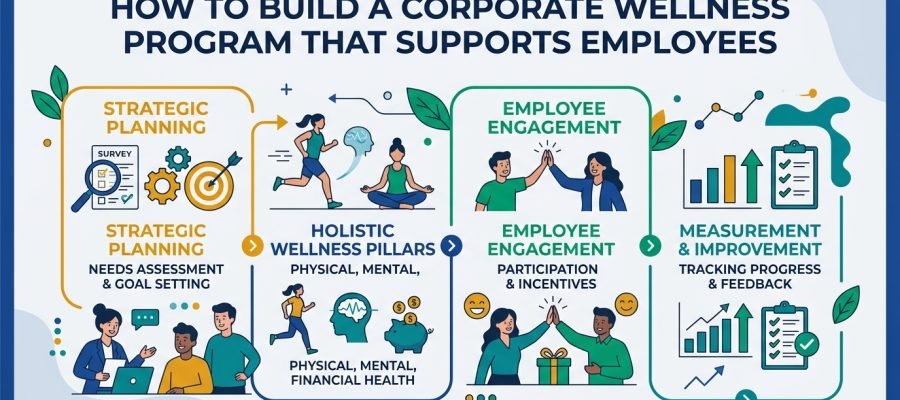
- Measure and improve. Review utilization, participation, employee feedback, absenteeism, retention, and other appropriate workforce indicators while protecting employee privacy.
Map the Program Before You Expand It
A personal mind map can give HR teams a practical view of the entire support ecosystem. Start with major employee life transitions, then branch into available resources, communication touchpoints, responsible teams, and unresolved gaps. Free online tools can make these maps easy to build and revisit; Adobe, for example, offers a free online mind-map tool. HR teams can get going with a visual reference that can be shared with leadership and updated as workforce needs and benefits change.
Where a Corporate Wellness Partner Fits
Destiny Management is a U.S.-based corporate wellness, fitness, and nutrition company founded by Terry Linde, an industry professional with more than 30 years of fitness experience. The company offers customizable corporate wellness services spanning fitness, nutrition, stress support, assessments, digital wellness, coaching, and HR-facing data analytics. Its programs are designed around business outcomes including lower absenteeism, stronger morale and engagement, healthier movement patterns, and improved productivity. For HR leaders and business owners seeking a tailored wellness program with measurable performance goals, call Destiny Management at 877-492-1957 to discuss how employee wellbeing can be connected to organizational outcomes.
A Useful Employer Resource
Employers reviewing the mental-health side of workplace wellness can also use the U.S. Department of Labor’s Mental Health at Work resources. The collection includes employer tools covering mentally healthy workplaces, accommodations, worker support, and related workplace guidance—useful context when wellness planning extends beyond physical health.
Frequently Asked Questions
Should an employer create a separate program for every life transition?
Not necessarily. A better model is a connected wellness framework with clearly signposted pathways for different situations. Employees should be able to recognize their circumstances and quickly understand which resources may be relevant.
How should EAPs fit into corporate wellness?
Treat the EAP as an integrated part of the wellness ecosystem rather than a phone number buried in a benefits portal. Explain what it can help with, reinforce confidentiality where applicable, and repeatedly remind employees how to access it.
What makes flexibility part of wellness?
Major life events frequently change an employee’s available time, energy, or responsibilities. Thoughtful flexibility can help employees continue working while managing temporary periods of unusually high personal demand.
Support People Through the Life They Actually Live
Corporate wellness becomes more meaningful when it recognizes that employee wellbeing changes with life circumstances. Connecting fitness and nutrition with emotional support, flexibility, EAP resources, and clear communication creates a program employees can navigate when they genuinely need help.
Please review our business on Google Yelp Facebook
Please visit our Members’ Area to access 100s of health and fitness topics and
Join Our Community to access shared knowledge, tips, tutorials, industry insights, and diverse viewpoints that aren’t easily found elsewhere.
Did you know you can work out and exercise with a trainer at your home, office, hotel room, or anywhere in the world with online personal training?
Like us on Facebook/Connect with us on LinkedIn/Follow us on X Instagram/YouTube/Pinterest
Make sure to forward this to friends and followers!