
Understanding how we learn is crucial to enhancing our educational experiences and outcomes. The psychology of learning explores various theories and approaches that explain how individuals acquire, process, and retain knowledge. In this article, we delve into the comparison between watching exercise videos and reading instructions, two prevalent methods of learning, particularly in the context of physical activities.
Learning theories emphasize the importance of different sensory modalities in acquiring new skills and knowledge. While some people learn best through visual stimuli, others might prefer textual descriptions, an approach often used in a Creative agency when designing educational and marketing content. These differences underscore the need to tailor educational approaches to fit the learner’s preferred style, thereby optimizing the learning process.
The Role of Visual Learning in Retention
Visual learning involves using images, videos, and other graphical content to understand and remember information. This method is particularly effective in retaining complex concepts because it allows learners to visualize relationships and processes. For instance, exercise videos can demonstrate proper form and technique, providing a comprehensive view that text descriptions might lack.
Several studies have shown that visual learning aids in better retention of information. The brain processes visual information faster and more efficiently than text, making it easier to recall. This is particularly beneficial when learning physical activities, where observing movements can lead to quicker and more accurate execution.
Furthermore, visual learning engages multiple cognitive functions, such as attention, perception, and memory. It also caters to the brain’s natural inclination towards visual processing. By incorporating visual elements into the learning process, you can enhance your ability to retain and apply new knowledge or skills effectively.
Comparing Exercise Videos and Written Instructions
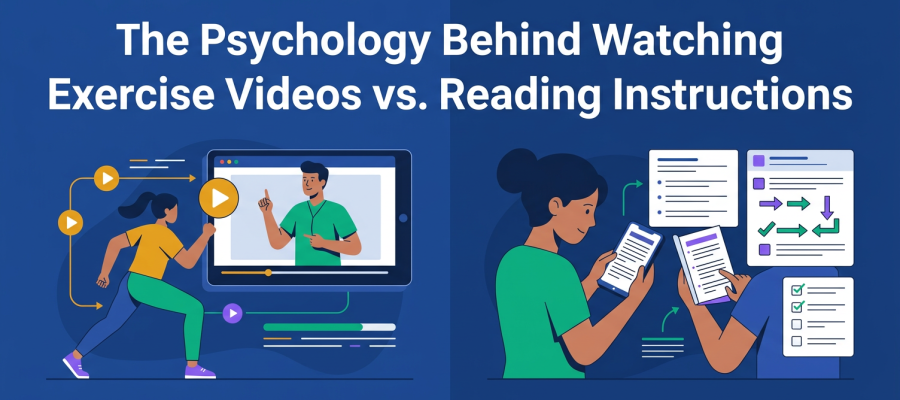
When it comes to learning physical exercises, both videos and written instructions offer unique benefits and challenges. Exercise videos provide a dynamic and interactive experience, allowing you to observe the nuances of each movement, including routines like cervical disc bulge exercises. Meanwhile, written instructions give you the flexibility to process information at your own pace and revisit specific points whenever necessary.
Exercise videos are particularly useful for beginners who need guidance on posture and technique. They offer a step-by-step demonstration, making it easier for you to follow along and replicate the actions. Conversely, written instructions are beneficial for learners who prefer to analyze and understand the mechanics before attempting the exercise.
Despite their differences, both learning methods can complement each other. For example, watching a video can give you a visual reference, while reading the instructions can help reinforce your understanding by providing detailed explanations. By combining these approaches, you can create a more holistic learning experience that caters to various learning preferences.
The Science Behind Learning Styles
Learning styles refer to the preferred ways individuals process information. Commonly categorized into visual, auditory, and kinesthetic, these styles influence how you engage with and absorb new content. Understanding your learning style can help you choose the most effective method for acquiring new skills.
Visual learners benefit from images, diagrams, and videos. They tend to remember information better when it is presented graphically. Auditory learners, on the other hand, prefer listening to explanations and discussions. They often excel in environments where verbal instructions are prevalent.
Kinesthetic learners, by contrast, learn best through hands-on activities and physical engagement. They thrive in settings that allow for movement and practical application. Recognizing your learning style can empower you to tailor your approach, whether it involves watching exercise videos, reading instructions, or combining both methods to suit your needs.
Benefits of Watching Exercise Videos
Watching exercise videos offers several advantages, particularly for visual learners. First, videos provide a comprehensive understanding of the exercise, showcasing the correct form, pace, and breathing techniques. This visual demonstration can be instrumental in preventing injuries and ensuring effective workouts.
Secondly, exercise videos often come with expert commentary and tips, offering insights that might not be captured in written instructions. These additional cues can help you refine your technique and achieve better results. Moreover, videos cater to different fitness levels, allowing you to select routines that match your capabilities.
Lastly, the convenience of accessing exercise videos online means you can learn at your own pace and revisit challenging sections as needed. This flexibility enables you to master exercises without the pressure of keeping up with a live class, thereby enhancing your confidence and motivation to continue learning.
The Advantages of Reading Instructions
While videos provide a visual guide, reading instructions offers a different set of benefits, particularly for those who prefer a more analytical approach. Written instructions allow you to process information at your own pace, enabling you to focus on specific details without feeling rushed.
Reading instructions also encourages critical thinking and comprehension. By interpreting written descriptions, you engage your cognitive faculties, which can lead to a deeper understanding of the exercise mechanics. This method can be particularly beneficial for complex exercises that require careful consideration of each step.
Furthermore, written instructions are often accompanied by diagrams or illustrations, which can further aid in understanding. They serve as a valuable reference that you can easily revisit, making them an excellent resource for reinforcing learning and ensuring consistency in your practice.
Cognitive Load Theory and Its Implications
Cognitive Load Theory (CLT) suggests that the human brain has a limited capacity for processing information. When learning new skills, it’s crucial to manage this cognitive load to prevent overload, which can hinder learning and retention. Understanding CLT can help you choose the most effective learning method.
Exercise videos, while visually engaging, can sometimes present too much information at once, overwhelming your cognitive resources. Conversely, written instructions might require you to process complex information without visual cues, which can also strain cognitive capacity.
Balancing the cognitive load involves selecting a method that aligns with your learning style and the complexity of the exercise. By doing so, you can optimize your learning experience, ensuring that you retain and apply new skills effectively without becoming overwhelmed.
Practical Applications: Choosing the Right Learning Method
Choosing the right learning method involves considering several factors, including your learning style, the nature of the exercise, and your personal preferences. Both exercise videos and written instructions offer unique advantages, and the key is to find a balance that works for you.
Consider creating a learning plan that incorporates both methods. For instance, you can start by watching a video to get a visual understanding of the exercise, followed by reading instructions to reinforce the information. This approach allows you to benefit from the strengths of each method, enhancing your overall learning experience.
Additionally, don’t hesitate to experiment with different formats and resources. The digital age offers a plethora of options, from interactive apps to virtual classes, each providing unique ways to learn. By exploring these options, you can discover new methods that resonate with your learning style, keeping you engaged and motivated.
Conclusion: Finding the Balance for Effective Learning
In conclusion, the psychology of learning highlights the importance of recognizing and adapting to individual learning styles. Whether you prefer watching exercise videos or reading instructions, each method has its own set of advantages that can enhance your learning experience.
By understanding the benefits and limitations of both approaches, you can make informed decisions about the best way to learn new skills. Remember, the goal is to find a balance that caters to your unique needs and preferences, ensuring that your learning journey is both effective and enjoyable.
Please review our business on Google Yelp Facebook
Please visit our Members’ Area to access 100s of health and fitness topics and
Join Our Community to access shared knowledge, tips, tutorials, industry insights, and diverse viewpoints that aren’t easily found elsewhere.
Did you know you can work out and exercise with a trainer at your home, office, hotel room, or anywhere in the world with online personal training?
Like us on Facebook/Connect with us on LinkedIn/Follow us on X/Pinterest/Instagram/YouTube
Make sure to forward this to friends and followers!