
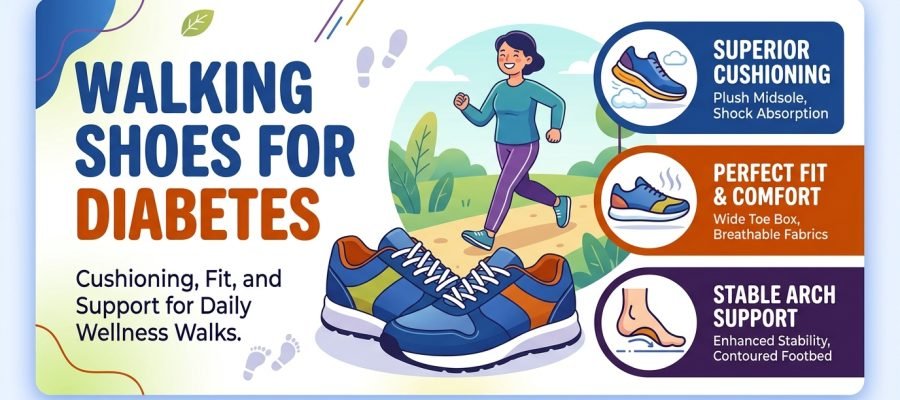

When you have diabetes, selecting the right footwear becomes crucial for maintaining foot health. Diabetes can lead to complications such as neuropathy and poor circulation, which makes your feet more vulnerable to injuries and infections. Wearing appropriate walking shoes is not just about comfort; it’s about safeguarding your health. Proper footwear helps in preventing wounds and ulcers, which can be difficult to heal for diabetics.
Good walking shoes act as a barrier between your feet and the ground, providing necessary protection. They help distribute pressure evenly across your feet, reducing the risk of calluses and blisters. By offering a stable and cushioned platform, these shoes help in minimizing the risk of falls and injuries, which can be a significant concern for individuals with diabetes, especially when choosing footwear with guidance from a diabetes specialist.
The right walking shoes also improve your overall mobility, allowing you to engage in regular physical activity. This is essential for managing blood sugar levels and maintaining a healthy lifestyle. Therefore, investing time and effort into choosing the right pair of shoes can have long-term health benefits, making it a vital step in your wellness journey.
Key Features to Look for in Walking Shoes for Diabetes
Choosing walking shoes with the correct features can make a significant difference in your daily comfort and health. First and foremost, look for shoes that offer excellent cushioning. This cushioning absorbs impact as you walk, which is particularly important for diabetics to prevent foot injuries. For those who prefer a more tailored fit, handmade mens shoes can also offer added comfort and support.
Another critical feature is the fit. Shoes that are too tight or too loose can cause friction and lead to sores or blisters. Look for shoes that offer a snug fit without pinching your toes or heels. Adjustable features like laces or Velcro straps can help you achieve the perfect fit, accommodating any swelling that might occur throughout the day.
Supportive features such as arch support and a firm heel counter are also essential. These features help maintain proper alignment and prevent overpronation, which can contribute to issues such as lateral ankle pain. Additionally, look for shoes with a roomy toe box to avoid cramping and pressure on your toes, which is crucial for those with neuropathy.
The Role of Cushioning in Walking Shoes
Cushioning plays a pivotal role in protecting your feet, especially if you are diabetic. Proper cushioning absorbs the shock of each step, reducing stress on your feet and joints. This is particularly important for diabetics, as reduced sensation in the feet can lead to unawareness of minor injuries that can escalate into major problems.
There are various cushioning materials available, such as gel, foam, or air cushioning systems. Each type offers different levels of comfort and support. Gel cushioning provides excellent shock absorption, while foam cushioning offers a softer, more cushioned feel. Air cushioning systems are known for their lightweight nature and ability to provide consistent cushioning over time.
When selecting walking shoes, consider the type of cushioning that feels most comfortable for you. Testing different shoes and walking in them for a few minutes can give you a better idea of what works best for your needs. Remember, the right cushioning not only enhances comfort but also plays a critical role in preventing foot injuries.
Importance of a Proper Fit: How to Choose the Right Size
Finding the right size in walking shoes is essential for comfort and foot health. A properly fitting shoe supports your foot structure and reduces the risk of blisters and calluses. Begin by measuring your feet regularly, as foot size can change over time due to factors like age or medical conditions.
When trying on shoes, ensure that there is enough room in the toe box for you to wiggle your toes. Your heel should fit snugly in the shoe without slipping, and there should be about a thumb’s width of space between your longest toe and the end of the shoe. It’s advisable to try on shoes later in the day when your feet are slightly swollen to ensure a comfortable fit throughout the day.
Different brands may have slightly different sizing, so don’t hesitate to try a half size up or down to get the right fit. Also, consider the width of the shoe; some brands offer multiple width options to accommodate different foot shapes. Remember, a perfect fit is not just about length but also about width and overall comfort.
Supportive Features: Arch Support, Stability, and Heel Height
Supportive features in walking shoes are crucial for maintaining foot health and preventing injuries, especially for individuals with diabetes. Arch support is a key element that helps distribute pressure evenly across your foot, reducing strain on your arches. This can prevent issues such as plantar fasciitis and provide a stable foundation for your walk.
Stability features in walking shoes include a firm heel counter and a solid midsole. These elements work together to prevent excessive foot movement, which can lead to injuries. A stable shoe helps keep your foot aligned, reducing the risk of overpronation or supination, which can cause pain and discomfort.
Heel height is another important factor to consider. Shoes with a slightly elevated heel (around 1 to 1.5 inches) can offer better support and balance. However, avoid excessively high heels as they can put undue pressure on the forefoot. A moderate heel combined with proper arch support and stability features can greatly enhance your walking experience.
Recommended Materials for Walking Shoes for Diabetics
The materials used in walking shoes can significantly impact comfort and foot health. For diabetics, breathable materials like mesh are highly recommended as they allow air to circulate, keeping your feet cool and dry. This reduces the risk of fungal infections and keeps your feet comfortable during longer walks.
Leather is another material that can be beneficial for diabetic walking shoes. It offers durability and can provide a more structured support, which is ideal for those needing additional stability. However, ensure that the leather is soft and flexible to avoid any rigid pressure points that could lead to blisters.
Insoles made from materials like memory foam or gel can provide additional cushioning and support. These insoles mold to the shape of your foot, offering a custom fit that can enhance comfort. Look for shoes with removable insoles, as they allow you to replace them with custom orthotics if needed.
Top Brands Offering Quality Walking Shoes for Diabetics
Several brands are known for offering quality walking shoes designed specifically for diabetics. New Balance is a popular choice, known for their wide range of widths and sizes, which ensures a good fit for various foot shapes. Their shoes often feature excellent cushioning and arch support, making them ideal for diabetics.
Brooks is another brand that provides shoes with superior cushioning and support. Their shoes are designed to offer maximum comfort, and many options come with removable insoles to accommodate custom orthotics. Skechers also offers a range of walking shoes with memory foam insoles and breathable uppers, providing both comfort and support.
Orthofeet specializes in therapeutic footwear and offers shoes with extra depth and a non-binding fit, which is perfect for those with sensitive feet. Their shoes often include multiple layers of cushioning and arch support, ensuring a comfortable and supportive walking experience.
Tips for Maintaining Your Walking Shoes
Taking care of your walking shoes can prolong their life and maintain their performance. Start by regularly cleaning your shoes to remove dirt and debris, which can wear down the materials over time. Use a soft brush and mild soap to gently clean the exterior, and let them air dry away from direct sunlight.
Inspect your shoes periodically for signs of wear, such as worn-out soles or fraying materials. Replacing your shoes when they show significant signs of wear is crucial, as worn shoes can lead to foot discomfort and increase the risk of injuries. Consider rotating between two pairs of shoes to extend their lifespan.
Keep your shoes dry by removing the insoles after each walk to let them air out. This prevents moisture buildup, reducing the risk of odor and bacteria growth. If your shoes get wet, stuff them with newspaper to help them dry faster and maintain their shape.
How to Break in New Walking Shoes Safely
Breaking in new walking shoes is an important step to ensure comfort and prevent blisters. Start by wearing your new shoes for short periods around the house to allow your feet to adjust to them. Gradually increase the time you wear them, allowing the shoes to mold to the shape of your feet.
Pay attention to any areas that feel tight or cause discomfort. If necessary, adjust the laces for a better fit or consider using blister pads on sensitive areas. Avoid going for long walks in new shoes until they feel comfortable and well-fitted to your feet.
Another tip is to wear the socks you plan to use during your walks when breaking in your shoes. This ensures that the fit is accurate and helps prevent any unexpected friction. Remember, taking the time to properly break in your shoes can make a significant difference in your walking experience.
Conclusion: Making Informed Choices for Your Walking Journey
Choosing the right walking shoes is a crucial part of managing diabetes and maintaining foot health. By focusing on cushioning, fit, and support, you can ensure that your footwear meets the specific needs of your condition. Remember to consider the materials, supportive features, and fit when selecting your shoes, and explore reputable brands known for their diabetic-friendly designs.
Maintaining your shoes and breaking them in safely are also essential steps to ensure they provide the comfort and support you require. By making informed choices, you can enjoy your daily wellness walks with confidence, knowing your feet are protected and supported.
Please review our business on Google Yelp Facebook
Please visit our Members’ Area to access 100s of health and fitness topics and
Join Our Community to access shared knowledge, tips, tutorials, industry insights, and diverse viewpoints that aren’t easily found elsewhere.
Did you know you can work out and exercise with a trainer at your home, office, hotel room, or anywhere in the world with online personal training?
Like us on Facebook/Connect with us on LinkedIn/Follow us on X Instagram/YouTube/Pinterest
Make sure to forward this to friends and followers!