
30 seconds summary
- Cupping therapy is a recovery technique where suction cups are placed on the skin to gently lift tissue and boost local blood flow. For athletes, it’s commonly used to help improve circulation, reduce muscle tightness, and support recovery by increasing tissue mobility and calming soreness after intense training.
- Some people also report better range of motion and a “looser” feeling that can help movement quality and performance, but results vary, and the evidence is mixed. The round marks are usually harmless bruising from suction, not injury.
- It’s best used as a complement to proven recovery basics like sleep, smart training load, nutrition, hydration, and physiotherapy especially if you have a medical condition or take blood thinners.
Walk into almost any modern training room especially around big competitions and you’ll see circular “cup marks” on shoulders, backs, quads, and calves. Cupping therapy has become one of the most visible recovery tools in sport, partly because of high-profile athletes using it and partly because it feels like it’s doing something: suction, pressure, warmth, and an immediate sense of “release.”
But what does cupping actually do for athletes? Does it really improve circulation, speed recovery, and enhance performance or is it mostly tradition and placebo?
The most honest answer is: cupping can produce real, measurable local effects (especially on skin blood flow and short-term pain), but strong evidence for consistent performance enhancement is limited and mixed. In other words, it may help some athletes in some situations, but it’s not a magic recovery hack and it comes with real risks if done poorly.
Below is a detailed, athlete-focused look at how cupping works, what the science says, and how to use it more safely and intelligently.
1) What is cupping therapy?
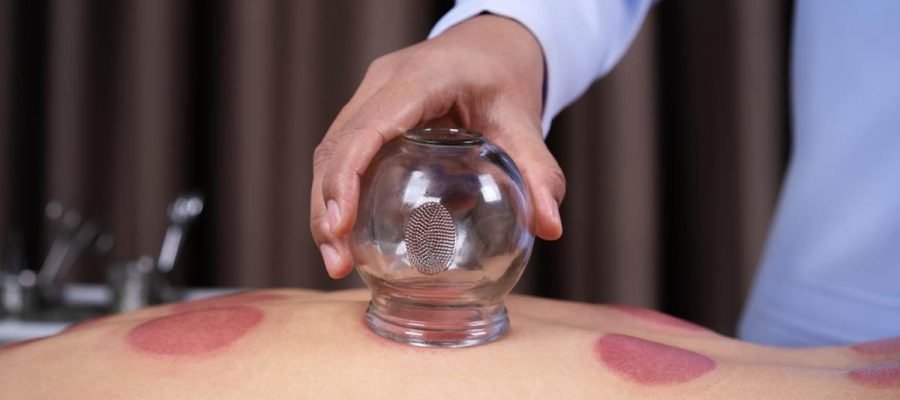
Cupping therapy is a technique that uses cups (glass, plastic, silicone, bamboo, etc.) to create negative pressure (suction) on the skin. The suction gently pulls the skin and superficial tissues upward into the cup.
The two most common forms:
- Dry cupping: suction only (no bloodletting).
- Wet cupping (Hijama): suction combined with small skin incisions to draw a small amount of blood.
There are also technique variations athletes often encounter:
- Stationary cupping: cups stay in place for a set time (often 5–15 minutes).
- Dynamic/moving cupping: a cup is glided over tissue (usually with oil or lotion), often used like a “myofascial” technique.
- Pulsed/mechanical cupping devices: suction cycles up and down with a device rather than manual pumping.
A key point for athletes: the round marks are expected. They’re typically a form of bruising or petechiae caused by suction-related capillary changes; they can last days to over a week. Health authorities note these marks should be explained to healthcare providers so they aren’t mistaken for signs of physical abuse.
2) Why athletes use cupping
Athletes usually pursue cupping for four overlapping reasons:
- Improved circulation to tight or sore areas
- Pain relief (especially muscle soreness and trigger-point-like discomfort)
- Better mobility (feeling “looser”, improved range of motion)
- Faster recovery after heavy training blocks or competition
Sports medicine interest is real, but the scientific literature repeatedly points out that study quality varies, protocols are inconsistent (pressure, duration, cup type, placement), and results often don’t replicate cleanly across populations. A large umbrella review focused on musculoskeletal pain (including athletes) found low methodological quality across many reviews and insufficient evidence to recommend cupping specifically for athletes, while also noting reported risks like hematoma, pain, tingling, and dizziness.
3) “Improves circulation”: what that really means
Local blood flow is the most supported physiological effect
When people say cupping “improves circulation,” they usually mean increased local blood flow in the treated area. This is one of the more plausible and measurable effects.
Research has shown that cupping can create large increases in skin blood flow near the treatment site, and that the effect changes with suction pressure and time. For example, one experimental study reported that higher negative pressure increased skin blood flow more, and interestingly, a shorter duration (e.g., 5 minutes) could create a larger peak response than a longer duration (e.g., 10 minutes) in certain settings.
Microcirculation and “reactivity”
Some newer work explores whether cupping affects microvascular reactivity (how small vessels respond to restricted and restored blood flow). This is still an emerging area, but it’s one of the better scientific directions because it measures something concrete rather than relying only on “feels better” outcomes.
What cupping probably doesn’t mean
It’s important not to over-interpret the word “circulation.”
- Cupping can increase local superficial perfusion, but that does not automatically mean it improves whole-body circulation, endurance capacity, oxygen delivery to working muscle, or “detoxification.”
- “Toxins being pulled out” is a popular story, but it’s not a well-supported physiological mechanism in sports science.
So: cupping can plausibly increase local blood flow and change superficial tissue dynamics, which might contribute to symptom relief but that’s different from boosting cardiovascular performance.
4) How cupping might reduce pain and soreness
Pain relief is one of cupping’s most commonly reported benefits, and there are several plausible mechanisms none of which require mystical explanations:
A) Neurological modulation
Strong sensory input (suction pressure, stretching skin receptors) may alter pain processing through mechanisms like gate control and other central pain modulation pathways. The result can reduce perceived soreness for a period after treatment.
B) Myofascial “decompression” and tissue glide
Unlike deep tissue massage that compresses tissue downward, cupping pulls tissue upward. Some athletes describe this as a “different kind of release,” especially over areas that feel glued-down or restricted. Whether this represents true fascial remodelling or mainly a short-lived sensory effect is still debated, but the perceived change can be meaningful for movement comfort.
C) Inflammatory and biochemical signals (DOMS context)
Delayed onset muscle soreness (DOMS) involves soreness, stiffness, and temporary function loss after unaccustomed or intense exercise. A 2025 clinical trial studied different negative-pressure levels after inducing DOMS in the quadriceps and reported improvements in pain scores, range of motion, functional tests, and some blood biomarkers (e.g., CK, LDH, inflammatory cytokines) in higher-pressure groups.
That’s promising but one trial doesn’t settle the question. DOMS research is notoriously variable: soreness naturally peaks and resolves, and many interventions look good in some studies and neutral in others.
5) What does the broader evidence say for athletes?
Systematic reviews: cautious and mixed
A well-cited systematic review of randomized trials specifically in athletes concluded that evidence was scarce and did not allow a clear recommendation for or against cupping in athletes, emphasizing the need for better trials.
An umbrella review (review of systematic reviews) on musculoskeletal pain found that while cupping sometimes appeared better than passive controls (like usual care, heat, or no treatment), overall most systematic reviews in that umbrella suggested cupping was ineffective, and the authors highlighted low confidence due to methodological weaknesses.
Range of motion and “feeling looser”
Short-term mobility changes are one of the areas where athletes most commonly report benefit. A randomized controlled trial in senior male handball players examined dynamic cupping and shoulder active range of motion and represents the kind of sport-specific research that’s helpful (though the key question remains: does a ROM bump translate into better performance or lower injury risk?).
Performance outcomes: where the evidence thins out
Even when athletes feel better, objective performance improvements (speed, jump height, strength, endurance) are harder to demonstrate reliably. Some studies show small short-term functional changes; others show no meaningful difference versus sham or comparison treatments. For example, a randomized trial reported cupping did not improve quadriceps muscle pain and fatigue after running over a 72-hour follow-up, illustrating that cupping isn’t consistently effective across settings.
Bottom line: cupping may help pain and perceived recovery for some athletes, sometimes improves ROM acutely, but consistent performance enhancement is not well-established.
6) Practical ways athletes use cupping (and what makes sense)
If you treat cupping as a recovery and symptom-management tool (not a performance drug), it becomes easier to use intelligently.
- After heavy eccentric sessions (DOMS-prone workouts)
- During high-load training weeks when soreness accumulates
- When an athlete feels “restricted” and needs short-term mobility relief
- For localized muscle tightness where massage alone hasn’t helped
As part of a broader recovery routine A) When cupping may be most useful
- (sleep, nutrition, hydration, load management)
B) When cupping may be a bad idea
- Right before an event if cup marks or tenderness could affect contact, grip, or comfort
- Over fresh strains, acute swelling, or suspected tears
- On skin that’s irritated, broken, infected, or inflamed
- If you bruise easily or have a history of problematic bruising
C) Dose and method matter
Cupping outcomes likely depend on:
- suction level (pressure)
- time under tension
- cup size and placement
- stationary vs moving technique
- total area treated
- the athlete’s skin and tissue sensitivity
Because protocols vary so widely, it’s wise to start conservative: fewer cups, lighter suction, shorter durations and track response.
7) Safety, side effects, and “don’t do this” rules
Cupping is often described as “low risk,” but that’s only true when it’s done correctly and appropriate for the person.
The U.S. National Center for Complementary and Integrative Health (NCCIH) notes cupping can cause persistent skin discoloration, scars, burns, and infections, and can worsen some skin conditions (eczema, psoriasis). It also describes rare but serious events, including bleeding inside the skull after scalp cupping and anemia from repeated wet cupping.
Extra caution with wet cupping (Hijama)
Wet cupping adds risks because it involves skin breaks and blood exposure:
- infection risk increases if sterile technique is poor
- anemia risk can increase if sessions are frequent or bleeding is more than minimal.
If an athlete chooses wet cupping for cultural or personal reasons, it should be treated like a minor medical procedure: hygiene, sterile equipment, practitioner training, and conservative frequency matter.
Contraindications and “ask a clinician first”
Athletes should be especially careful (or avoid cupping) if they:
- take blood thinners or have a bleeding disorder
- have compromised immune function
- have active skin infections or uncontrolled skin disease
- have poor wound healing or uncontrolled diabetes
- have a history of fainting with procedures
- are pregnant (seek medical guidance; avoid abdominal/lumbar areas unless cleared)
Anti-doping considerations
Cupping itself is not listed as a prohibited “substance,” but athletes should still keep anti-doping awareness in mind—especially if any procedure involves blood or injections. WADA publishes an annually updated Prohibited List, including prohibited methods related to blood manipulation.
For elite or tested athletes, the safest approach is simple: loop in the team physician/medical staff and document any therapy that involves blood or medical devices.
8) How to integrate cupping into a real recovery plan
Cupping if used works best when it’s not treated as the main recovery driver. The “big rocks” still dominate athletic recovery and performance:
- Sleep quantity and quality
- Adequate protein and total energy intake
- Hydration
- Training load management
- Evidence-backed modalities when needed (e.g., massage, cooling strategies, compression, etc., depending on the goal)
One umbrella review of physiotherapy interventions for DOMS (across many treatments) highlights that evidence quality varies widely and that only some modalities show stronger support at particular time points illustrating why no single tool should become the whole plan.
A practical athlete approach:
- Decide the goal (pain relief? ROM? Relaxation?)
- Apply cupping conservatively (dose, pressure, duration)
- Measure outcomes (pain scale, ROM measure, training performance, next-day readiness)
- Keep what works, discard what doesn’t
- Avoid stacking too many modalities at once, or you’ll never know what helped.
9) So… does cupping improve circulation, recovery, and performance?
Circulation
- Supported (locally): Cupping can increase local skin blood flow and influence superficial circulation in the treated region.
- Not proven (systemically): There’s no solid basis to claim it meaningfully boosts whole-body circulation or endurance physiology.
Recovery
- Possible: Some trials (including DOMS-focused work) show improvements in soreness and certain functional measures.
- Inconsistent: Other trials show minimal or no benefit, and many reviews emphasize limitations and bias risks.
Performance
- Weak evidence overall: Some immediate mobility or function changes may occur, but consistent improvements in athletic performance are not well demonstrated. Athlete-focused reviews remain cautious.
Conclusion
Cupping therapy sits in an interesting middle ground for athletes:
- It’s not pure hype; it can produce real local physiological changes (especially superficial blood flow) and may reduce soreness or improve perceived readiness for some people.
- It’s not a guaranteed performance enhancer. Evidence is mixed, effects are often short-term, and study quality is a recurring problem.
- It can cause harm when done aggressively or unsafely (burns, infections, persistent skin changes; higher risks with wet cupping).
If you treat cupping as a supportive tool used selectively, safely, and tracked for real outcomes, it can fit into a thoughtful recovery strategy. If you treat it as a shortcut to elite performance, it will usually disappoint.
Please review our business on Google Yelp Facebook
Please visit our Members’ Area to access 100s of health and fitness topics and
Join Our Community to access shared knowledge, tips, tutorials, industry insights, and diverse viewpoints that aren’t easily found elsewhere.
Did you know you can work out and exercise with a trainer at your home, office, hotel room, or anywhere in the world with online personal training?
Like us on Facebook/Connect with us on LinkedIn/Follow us on X
Make sure to forward this to friends and followers!